Preventative Maintenance: Why It Saves Money Long-Term

Short answer: Preventative maintenance saves money by reducing breakdowns, extending equipment life, improving efficiency, and preventing costly emergency repairs.

For many businesses, maintenance is easy to delay, especially when equipment appears to be running fine. But waiting until something breaks is often the most expensive approach. Preventative maintenance shifts the focus from reactive fixes to proactive care, delivering measurable long-term savings.

1. Reduces Costly Breakdowns

Unexpected equipment failures can halt operations, disrupt service, and require emergency repairs — often at premium costs. Preventative maintenance helps identify small issues early, before they escalate into major failures.

Fixing a worn seal or minor leak is far less expensive than replacing a damaged system or dealing with downtime during peak business hours.

2. Extends Equipment Lifespan

Regular inspections, cleaning, and adjustments help equipment operate as intended. Over time, this reduces wear and tear and extends the usable life of systems.

Replacing equipment prematurely is a significant capital expense — one that can often be delayed through consistent maintenance.

3. Improves Efficiency and Performance

Well-maintained systems operate more efficiently. In applications like draft beverage systems, gas delivery systems, or propane equipment, proper calibration ensures:

  • Consistent performance
  • Reduced energy consumption
  • Less product waste

Efficiency gains may seem small individually, but they add up quickly over time.

4. Lowers Energy and Operating Costs

Equipment that is out of balance — whether due to dirty lines, incorrect pressure, or worn components — often consumes more energy or resources than necessary.

Preventative maintenance ensures systems are optimized, helping reduce ongoing operating costs.

5. Supports Safety and Compliance

Routine maintenance also plays a key role in safety. Identifying leaks, pressure issues, or worn components helps prevent accidents and ensures compliance with industry standards.

Avoiding safety incidents not only protects people, it also prevents costly liability and regulatory penalties.

The Bottom Line

Preventative maintenance is an investment, not an expense. By addressing issues early and keeping systems running efficiently, businesses can avoid major costs, improve performance, and extend the life of their equipment.

Working with experienced providers like Irish Beverage Services ensures maintenance is performed consistently and correctly — helping protect both your equipment and your bottom line.

The Future of Beverage-Dispensing Technology

Short answer: The future of beverage-dispensing technology is being shaped by smart systems, automation, improved gas management, and sustainability-focused design — all working together to deliver more consistent, efficient, and customizable beverage service.

As customer expectations rise and operations become more data-driven, beverage-dispensing systems are evolving beyond simple tap setups. Today’s innovations are focused on precision, efficiency, and experience — with technology playing a central role.

Smarter, Connected Systems

Modern draft systems are increasingly incorporating digital monitoring and IoT (Internet of Things) technology. These systems can track:

  • Temperature consistency
  • Gas pressure levels
  • Flow rates and usage patterns

With real-time data, operators can identify issues early, reduce waste, and maintain consistent beverage quality without relying solely on manual checks.

Advanced Gas Blending and Control

Gas management is becoming more precise. Future systems are leveraging automated gas blending and pressure regulation to ensure beverages are dispensed exactly as intended.

This is especially important for:

  • Nitrogen-infused beverages
  • Long-draw draft systems
  • Multi-product dispensing setups

Improved gas control leads to better carbonation, reduced foam, and a more consistent customer experience.

Sustainability-Driven Design

Sustainability is a major driver of innovation. New systems are being designed to:

  • Reduce product waste
  • Minimize energy consumption
  • Replace single-use packaging with bulk dispensing

Draft systems themselves are already a step toward sustainability, and future advancements will continue to improve efficiency across the entire beverage lifecycle.

Customization and Beverage Variety

Consumers are seeking more personalized beverage experiences. Emerging technologies support:

  • Multi-tap systems with diverse offerings
  • Adjustable carbonation and texture profiles
  • Integration with cold brew, cocktails, and non-alcoholic beverages

This flexibility allows businesses to expand offerings without significantly increasing complexity.

Automation and Operational Efficiency

Automation is helping reduce labor demands and streamline operations. From automated cleaning systems to self-calibrating equipment, these innovations allow staff to focus more on service and less on maintenance.

The Bottom Line

The future of beverage-dispensing technology is about control, consistency, and adaptability. Businesses that embrace these advancements will be better positioned to deliver high-quality beverages while improving efficiency and reducing waste.

Partnering with experienced providers like Irish Beverage Services ensures access to both reliable systems and the latest innovations in beverage technology.

Signs Your Draft System Needs Immediate Attention

Short answer: If you’re seeing excessive foam, inconsistent pours, off flavors, or pressure issues, your draft system likely needs immediate service.

A well-functioning draft system should deliver consistent, great-tasting beverages every time. When something goes wrong, the signs often show up quickly — and ignoring them can lead to product waste, lost revenue, and poor customer experience.

1. Excessive Foam

Foamy pours are one of the most common warning signs. While some foam is normal, persistent or excessive foam often points to:

  • Incorrect gas pressure
  • Temperature fluctuations
  • Dirty lines
  • Improper gas blend

Left unaddressed, foam leads directly to wasted product and slower service.

2. Flat or Inconsistent Taste

If beverages suddenly taste flat, dull, or inconsistent, it may indicate:

  • Low CO₂ pressure
  • Gas supply issues
  • Leaks in the system
  • Temperature imbalance

Taste issues are especially critical because they directly impact customer satisfaction.

3. Off Odors or Unpleasant Flavors

Sour, musty, or “buttery” flavors can signal dirty draft lines or bacterial buildup. This is not just a quality issue, it can also raise food safety concerns.

Routine cleaning should prevent this, so noticeable off-flavors are a sign that immediate attention is needed.

4. Slow or Uneven Pouring

If taps are pouring too slowly — or inconsistently between pours — it may be due to:

  • Blockages in the lines
  • Failing regulators
  • Pressure imbalances
  • Kinked or damaged tubing

This can disrupt service and create frustration during busy hours.

5. Visible Leaks or Gas Loss

Hissing sounds, frost buildup, or rapidly depleting gas tanks are signs of leaks in the system. Gas leaks not only waste resources but can also pose safety risks.

6. Temperature Fluctuations

Warm beer or inconsistent temperatures often indicate:

  • Cooling system issues
  • Glycol system problems
  • Poor insulation along lines

Temperature instability leads to foam, flavor loss, and inconsistent carbonation.

The Bottom Line

Draft system issues rarely fix themselves, and small problems can quickly become expensive ones. Recognizing the early warning signs helps protect product quality, reduce waste, and keep operations running smoothly.

Working with an experienced provider like Irish Beverage Services ensures your system is properly maintained, balanced, and quickly serviced when issues arise.

Reducing Plastic Waste Through Draft Systems

Short answer: Draft beverage systems significantly reduce plastic waste by replacing single-use packaging like bottles and cans with reusable, high-volume dispensing systems.

As businesses and consumers become more environmentally conscious, reducing plastic waste has become a priority across the food and beverage industry. One of the most effective — and often overlooked — solutions is the use of draft beverage systems.

How Draft Systems Reduce Plastic Waste

Traditional packaged beverages rely heavily on single-use containers such as plastic bottles, aluminum cans, and shrink wrap packaging. These materials require energy to produce, transport, and recycle — and many still end up in landfills.

Draft systems eliminate much of this waste by delivering beverages in kegs or bulk containers, which are reused multiple times. A single keg can replace hundreds, sometimes thousands, of individual containers, dramatically reducing the amount of plastic entering the waste stream.

Fewer Materials, Less Packaging

In addition to eliminating bottles and cans, draft systems reduce the need for:

  • Plastic caps and seals
  • Labels and adhesives
  • Secondary packaging like cases and wraps

This streamlined approach minimizes material usage across the entire supply chain, from production to disposal.

Reduced Transportation Impact

Bulk delivery systems are also more efficient to transport. Moving beverages in kegs rather than individual containers reduces packaging weight and volume, which can lead to lower fuel consumption and fewer emissions during distribution.

Operational Benefits for Businesses

Beyond environmental impact, draft systems offer practical advantages:

  • Less storage space needed for packaging
  • Reduced waste handling and disposal costs
  • Improved efficiency in high-volume environments

For restaurants, bars, and venues, this translates into both sustainability gains and operational savings.

Supporting a More Sustainable Beverage Program

Transitioning to draft systems is a meaningful step toward reducing environmental impact without sacrificing quality or customer experience. When paired with proper system design and maintenance, draft systems deliver consistent pours while supporting long-term sustainability goals.

Working with an experienced provider like Irish Beverage Services ensures your system is optimized for both performance and efficiency.

The Bottom Line

Draft beverage systems offer a practical, scalable way to reduce plastic waste. By replacing single-use packaging with reusable systems, businesses can lower their environmental footprint—one pour at a time.

How Line Length and Temperature Affect Taste in Draft Beverage Systems

When customers enjoy a perfectly poured draft beverage, they’re experiencing the result of a carefully balanced system. Two factors that play a major role in beverage quality — yet often go unnoticed — are line length and temperature control. Both directly influence carbonation, foam stability, and ultimately the taste of the drink.

Draft beverage systems are designed so that pressure from carbon dioxide (CO₂), nitrogen (N₂), or blended gases pushes the beverage from the keg to the tap. Line length is critical in maintaining this balance. Beverage lines create resistance that helps control how quickly the liquid flows through the system. If the lines are too short, the beverage may travel too quickly, causing excess foam and inconsistent pours. Too long, and the system may struggle to deliver the beverage efficiently, potentially affecting carbonation levels and flavor balance.

Proper line length ensures that gas pressure, flow rate, and carbonation stay aligned. When the system is balanced correctly, the beverage reaches the faucet at the intended pressure and carbonation level — resulting in the smooth, consistent taste that brewers and beverage producers expect.

Temperature is equally important. Cold liquids hold carbonation more effectively, while warmer beverages allow carbon dioxide to escape more easily. If beverage lines or towers warm up, CO₂ can break out of solution prematurely, leading to foamy pours and flatter flavor. Even small temperature fluctuations along the path from keg to tap can disrupt the carbonation balance and change the way a drink tastes.

That’s why many draft systems rely on refrigerated storage and glycol-cooled trunk lines to maintain consistent temperatures all the way to the faucet. Keeping beverages at the proper serving temperature helps preserve carbonation, aroma, and mouthfeel.

Maintaining proper line length, temperature, and system balance requires thoughtful design and ongoing service. Working with experienced providers like Irish Beverage Services helps ensure draft systems deliver consistent pours and optimal beverage quality.

When line length and temperature are properly managed, every pour reflects the beverage exactly as it was meant to be enjoyed.

Why Routine Draft Line Cleaning Is Essential for Beverage Quality

Behind every great draft beverage is a system that must remain clean, balanced, and carefully maintained. One of the most important — but often overlooked — parts of draft system maintenance is routine draft line cleaning. Without proper cleaning, beverage quality can decline quickly, affecting taste, efficiency, and customer satisfaction.

Draft lines transport beverages from kegs or containers to the tap. Over time, residues such as yeast, sugars, proteins, and mineral deposits naturally build up inside these lines. In beer systems, this buildup can lead to the growth of microorganisms and biofilms that alter flavor and aroma. Even a small amount of residue can cause beverages to taste sour, stale, or inconsistent.

Regular cleaning helps preserve the intended flavor profile of the beverage. Brewers and beverage producers carefully design carbonation levels, aromas, and mouthfeel, but dirty lines can interfere with those characteristics before the drink even reaches the glass. Clean lines ensure the product tastes exactly as it was meant to.

Line cleaning also improves draft system performance. Residue buildup can disrupt proper flow, causing excessive foam, inconsistent pours, or pressure imbalances. These issues not only affect presentation but also lead to wasted product. Over time, repeated foam loss can significantly reduce the number of servings obtained from each keg.

Beyond quality and efficiency, routine cleaning supports food safety and equipment longevity. Removing buildup helps prevent corrosion, blockages, and damage to system components. A properly maintained draft system operates more reliably and requires fewer costly repairs.

Industry best practices typically recommend professional draft line cleaning every two weeks for most beverage systems, though exact schedules may vary depending on system design and usage levels.

Working with experienced providers like Irish Beverage Services helps ensure draft systems remain properly maintained, balanced, and performing at their best.

A great beverage experience starts long before the glass is filled. With routine draft line cleaning, businesses can protect product quality, reduce waste, and deliver consistent pours every time.

The Science Behind Perfect Carbonation

A perfectly carbonated beverage feels effortless: crisp, balanced, and refreshing. But behind that satisfying first sip is a careful interplay of science, pressure, and temperature.

Carbonation occurs when carbon dioxide (CO₂) dissolves into liquid under pressure. According to Henry’s Law, the amount of gas that dissolves in a liquid is directly proportional to the pressure applied — provided the temperature remains constant. In simple terms: higher pressure and colder temperatures allow more CO₂ to stay dissolved.

Temperature is critical. Colder liquids absorb and retain CO₂ more effectively, which is why draft systems are carefully refrigerated. If a beverage warms as it travels through lines or sits in a glass, CO₂ escapes more rapidly, creating excessive foam and flat flavor.

Pressure must also be precisely balanced. Too much pressure forces excess CO₂ into the beverage, resulting in over-carbonation, sharp acidity, and uncontrolled foam. Too little pressure allows CO₂ to break out of solution prematurely, causing flat pours and weak mouthfeel. Proper system calibration ensures the applied gas pressure matches the beverage’s desired carbonation level, line length, and elevation.

Different beverages require different carbonation profiles. Light lagers and sparkling waters typically have higher carbonation levels for a crisp, lively sensation. Stouts and nitrogen-infused beverages use blended gases to create smaller bubbles and a smoother texture. The size and behavior of bubbles directly affect aroma release, mouthfeel, and perceived flavor.

Even small variables — such as line cleanliness, regulator performance, or glass temperature — can disrupt carbonation balance. That’s why draft systems must be designed and maintained as a unified system rather than a collection of parts.

Partnering with an experienced provider like Irish Beverage Services ensures proper gas selection, pressure calibration, and system design tailored to each beverage program.

Perfect carbonation isn’t accidental. It’s the result of controlled temperature, precise pressure, and a well-balanced draft system working together to deliver consistency in every pour.

How Beverage Gases Reduce Product Waste

In beverage service, product waste quietly erodes profitability. Foamy pours, flat drinks, oxidation, and inconsistent carbonation may seem minor in isolation — but over time, they add up. Properly selected and managed beverage gases play a critical role in minimizing this waste while protecting quality.

At the core of every draft system is pressurized gas, typically carbon dioxide (CO₂), nitrogen (N₂), or a blended mix. These gases don’t just move product from keg to tap, they actively preserve it.

Carbon dioxide maintains carbonation levels in beer, sparkling water, and soda. When pressure is correctly balanced, it prevents over-foaming and under-carbonation, reducing the need to dump imperfect pours. Even a small reduction in foam waste can translate into dozens of saved servings per keg.

Nitrogen and nitrogen blends help stabilize beverages that require smoother textures or long-draw systems. Nitrogen is less soluble than CO₂, which means it provides push pressure without over-carbonating the beverage. This balance is especially important in high-volume bars and restaurants, where improper gas selection can result in excessive waste and inconsistent pours.

Beyond draft beer, beverage gases reduce waste in wine and cocktail programs. Nitrogen is commonly used to displace oxygen in wine systems, slowing oxidation and extending shelf life. This allows establishments to serve more by-the-glass options without discarding partially used bottles.

Proper gas blending also protects equipment. When systems are calibrated correctly, they reduce stress on lines, regulators, and taps — minimizing maintenance issues that can lead to downtime or spoiled product.

The key is precision. Gas pressure, temperature, line length, and blend ratios must work together as a balanced system. Partnering with an experienced provider like Irish Beverage Services ensures beverage gases are matched to your system design and usage patterns.

Reducing product waste isn’t just about sustainability, it’s about operational efficiency. When beverage gases are properly managed, every pour is more consistent, every keg lasts longer, and profitability improves one glass at a time.

What Is Beverage-Grade CO₂ (and Why It Matters)?

Carbon dioxide (CO₂) plays a vital role in the beverage industry. It carbonates soda, preserves freshness, powers draft systems, and contributes to mouthfeel in sparkling water, beer, and other beverages. But not all CO₂ is the same. When it comes to products meant for consumption, beverage-grade CO₂ is essential.

Beverage-grade CO₂ refers to carbon dioxide that meets strict purity standards established for food and drink applications. In the United States, these standards are governed by organizations such as the Compressed Gas Association (CGA) and the Food Chemicals Codex (FCC). Beverage-grade CO₂ typically must meet a purity level of 99.9% or higher and be free from harmful contaminants such as hydrocarbons, sulfur compounds, or moisture.

Why does this matter? Even trace impurities can affect taste, aroma, and safety. Off-flavors in beer or soda are sometimes traced back not to the beverage itself, but to contaminated or low-quality gas. In addition, impurities can damage equipment over time, leading to corrosion, inconsistent carbonation, and costly maintenance issues.

Beyond flavor, beverage-grade CO₂ ensures regulatory compliance. Restaurants, breweries, and beverage manufacturers must adhere to food safety standards, and using properly certified CO₂ is part of maintaining that compliance. Documentation, quality control testing, and supplier accountability all contribute to a safe and consistent product.

Beverage-grade CO₂ also plays a role in product consistency. Properly purified gas ensures stable carbonation levels, reliable draft performance, and predictable shelf life. When carbonation is balanced correctly, it enhances mouthfeel, aroma release, and overall drinking experience.

Working with an experienced supplier like Irish Beverage Services helps ensure that the CO₂ entering your system meets rigorous quality standards and is delivered reliably.

In beverage service, details matter. Beverage-grade CO₂ may be invisible, but its impact is unmistakable — from the first sip to the last.

From Tank to Tap: How a Draft Beverage System Works

A perfectly poured beverage may look effortless, but behind every smooth pour is a carefully designed draft system working in harmony. Understanding how a draft beverage system works — from tank to tap — helps explain why proper setup and maintenance are so important for quality, consistency, and efficiency.

It all begins with the beverage source, typically a keg, bag-in-box, or bulk container. Inside the keg, the beverage is sealed to protect freshness. To move it from the container to the tap, the system relies on pressurized gas, most commonly carbon dioxide (CO₂), nitrogen (N₂), or a blend of the two. This gas applies consistent pressure, pushing the beverage out of the container without exposing it to oxygen.

From there, the beverage travels through beverage lines — specialized tubing designed to preserve flavor and carbonation. Line length, diameter, and material are carefully selected based on the beverage type and distance to the tap. In longer-draw systems, additional considerations such as elevation changes and cooling become critical.

Temperature control plays a major role throughout the journey. Refrigeration systems keep the beverage cold from storage to dispense, preventing excess foam and protecting taste. In many setups, glycol-cooled trunk lines are used to maintain consistent temperature all the way to the faucet, even across long distances.

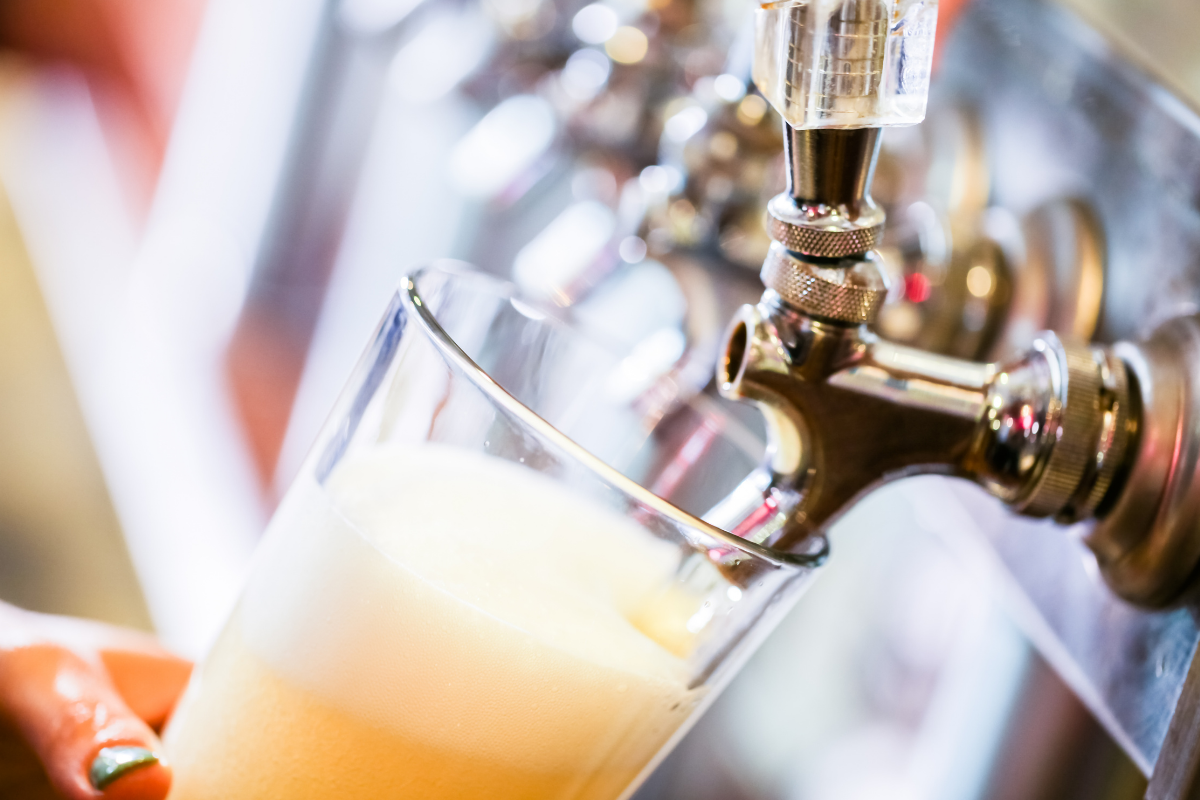
At the tap, a faucet and coupler system controls the final pour. When properly balanced, the result is a beverage with the correct carbonation, aroma, and head — served efficiently and consistently every time.

A well-designed draft system is more than equipment; it’s a calibrated ecosystem. Factors like gas pressure, temperature, line cleanliness, and system balance all influence the final product. That’s why working with experienced providers like Irish Beverage Services makes a meaningful difference.

From tank to tap, every component matters. When everything works together, customers can taste the difference.

Extra Small
Small
Medium
Large
Extra Large
Double XL